

The short version
Verification checks a detail; validation applies a rule; qualification judges fit
We separate these ideas because a valid phone number does not prove that an enquiry fits a buyer’s product, and a matching postcode does not prove that every contact field is usable.
The campaign should apply the right checks in the right place, then give sales the original answers and enough context to finish qualification through a useful conversation.
01 · Three different jobs
Use precise terms so buyers and providers agree what has happened
Providers use these words differently, so agree the check rather than relying on the label. A phone number passing a format check, a person confirming access to that phone and a completed conversation establish different things. None independently proves property ownership, project suitability or intent to buy.
Keep the origin of each answer clear. “Homeowner selected owner on the form” is self-reported information; it is not the same as an independently verified ownership record. “Roof suitable” should not be inferred from a postcode or a general property answer when an installer still needs to assess it.
At Adfluential, we agree campaign questions and filters with the buyer, check contact details and match enquiries to the agreed criteria. Ask which checks are included for your campaign. Later sales judgement remains with the buyer unless managed qualification or appointment support is included; technical suitability may still need a survey.

Build a question-to-decision map
For each question, write down what you will do with the answer
Start with the reason a buyer can or cannot serve an enquiry. Our insulation installation page separates installation and upgrade demand from removal enquiries. That is a useful qualification distinction: the answer changes which service is needed. Asking for more information without changing a decision is less useful.
The table below proposes questions for a home-improvement brief. It is not a statement that every Adfluential campaign collects these fields. Exact questions and supported services are agreed before launch.
| Consumer question | Use the answer to | If the person is unsure |
|---|---|---|
| Which service do you need? | Separate installation, replacement and repair routes | Offer a plain-language description or clarify during contact |
| What is the property postcode? | Match the request to actual coverage | Ask for correction; do not silently infer a different area |
| Are you the owner or arranging work for the owner? | Understand who can authorise the next step | Clarify involvement instead of assuming the project is impossible |
| When are you looking to start? | Distinguish current demand from future planning | Allow an honest planning answer and agree suitable follow-up |
| What would you like to change? | Give the adviser a relevant opening | Leave technical diagnosis and measurements to assessment |
Separate hard exclusions from information used to guide a conversation. A property outside every supported postcode may be an exclusion. An unknown budget for a job requiring a survey is not necessarily one. A consumer cannot always price work they have not yet had assessed.
Write the rule and the owner beside each field: who updates the coverage list, who handles an ambiguous answer, and which detail must be confirmed before an appointment? This gives campaign and sales teams a shared process without forcing every question into the first form.
03 · Place the question correctly
Not every qualification step belongs on the form
A product or postcode answer may be essential before matching. A detailed budget conversation may be more appropriate after the customer has understood the service. Asking too much too early can exclude genuine customers who do not yet know the answer.
We divide qualification across the campaign journey and sales process. The page captures the criteria required for matching; automated checks handle suitable data rules; the salesperson or managed call team confirms the detail that needs a conversation.
This avoids asking the consumer to complete the whole sales discovery before they have received any value.
04 · Qualification by sector
The questions should reflect the product and sales route
We do not apply one generic qualification checklist across every campaign. The useful criteria differ according to what can make the customer suitable, how the buyer operates and what the next step requires.
| Sector | Useful early context may include | What it supports |
|---|---|---|
| Solar | Product interest, property context, postcode and timeframe | Installer matching and survey preparation |
| Windows and doors | Product type, approximate project, material interest and location | Correct branch, product team and survey route |
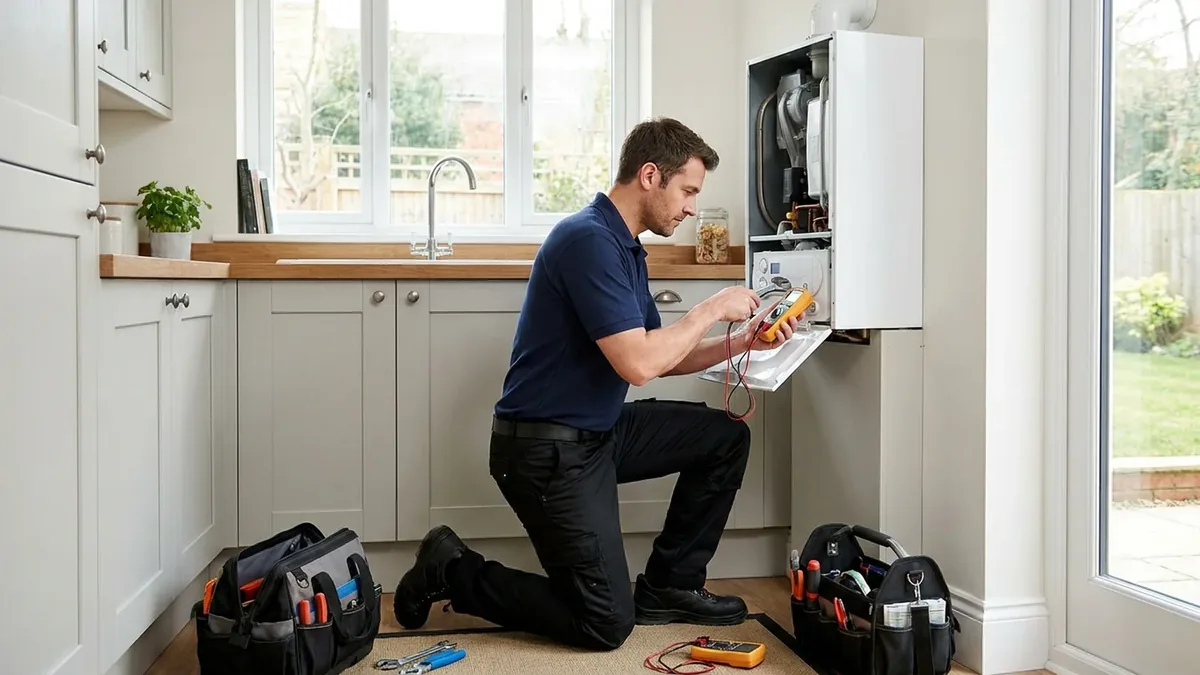
| Boilers | Replacement or repair need, property and heating context, timing | Appropriate installation or service conversation |
| Insulation | Insulation type, property information, location and current requirement | Product suitability and specialist matching |
| Garage doors | Installation, replacement, repair or automation requirement | Urgency, product and local service matching |

Solar
Property and Product Fit
Match interest in panels, batteries and installation to the buyer’s campaign.
Solar leads →
Windows
Product and Territory
Distinguish the products and areas each installation team can serve.
Window leads →
Insulation
Service Suitability
Reflect the insulation product and property context required by the specialist.
Insulation leads →05 · Avoid overqualification
More filters can reduce both poor fits and good opportunities
A stricter question can improve the average fit of accepted leads while reducing volume and increasing acquisition cost. It can also reject consumers who would have become suitable after a short conversation.
We recommend evaluating every proposed filter against the economics. Does the answer identify a project the buyer genuinely cannot serve, or is it trying to predict a sale with information the consumer cannot reliably provide? Use the least restrictive rule that solves the real operational problem.

06 · Improve with outcomes
Sales feedback should change qualification at source
One disputed lead may expose a problem, but it does not show the size or cause. We ask buyers to return consistent contact, appointment, quote and sale outcomes, together with specific reasons where a lead was not suitable.
If one answer, product, postcode or campaign repeatedly produces a different result, we can adjust targeting, pages, questions and filters. This is possible because we own and manage the generating campaigns.
The test is whether the next cohort becomes more useful—not whether the form becomes longer.
Qualification through Adfluential
We agree the checks around your campaign
Before launch, we agree the products, service areas, useful questions, contact checks, volume and delivery model. Matching leads are supplied exclusively and in real time with the answers collected during the journey.
Where the buyer wants a later handoff, managed qualification and appointment campaigns can add human contact before booking. The correct depth depends on what the buyer’s own team can perform.
Common questions
Lead qualification FAQs
What is lead qualification?
Lead qualification determines whether an enquiry fits the product, territory and sales criteria and whether it should progress to the next step.
What is lead validation?
Lead validation checks whether the submitted information is complete and matches documented campaign rules, such as required fields, product and location.
What is the difference between verification and qualification?
Verification checks a stated item such as a contact detail. Qualification considers whether the overall enquiry is suitable for the agreed sales process.
Which lead qualification questions should I ask?
Ask only questions that change matching, priority or sales treatment. Common consumer criteria include product, postcode, relevant property details, timeframe and preferred next step.
How can lead qualification improve over time?
Return contact, appointment, quote and sale outcomes by source and answer. Repeated patterns show which questions or criteria should be changed.