

The short version
Speed to lead starts when the customer submits, not when sales notices
Real-time delivery gets a current enquiry from the provider to the buyer promptly. Speed to lead continues the clock until the sales team makes its first relevant attempt. A useful report separates those two intervals.
We recommend responding as soon as a staffed team can do so well, while keeping the original request and context in the conversation.
01 · Separate the clocks
Delivery, first attempt and successful contact answer different questions
When a team says it responds quickly, the measurement may begin only after the lead appears in an inbox or work queue. That omits any delay before receipt. Equally, a provider can deliver in real time while the buyer leaves the enquiry untouched.
We recommend recording four simple moments: when the customer enquired, when the buyer received it, when the first relevant attempt happened and when meaningful contact occurred. This is enough to identify whether the delay sits in supply, ownership or availability.
02 · Real-time lead delivery
Current enquiries should not wait for a scheduled batch
We deliver matching leads in real time because the consumer has just asked about the product. Holding that enquiry for an end-of-day file separates the sales call from the action that created it.
Real time does not mean every buyer needs a complex integration. Depending on the campaign, delivery can use the buyer’s preferred system, email or a shared sheet. The important point is that the lead is available to the responsible team without avoidable provider delay.
It also does not guarantee a sale. It preserves a better starting point for the buyer’s own follow-up.

Build a report you can act on
Use response bands with an explicit unattempted count
We recommend reporting first sales attempts separately from successful contact. A call that rings out is an attempt. An automated receipt is an acknowledgement. A two-way discussion is contact. Logging all three as “responded” makes the report look faster without showing whether anyone spoke to the customer.
Choose non-overlapping bands and keep them stable. The bands below are an example reporting structure, not promised response times or conversion benchmarks. Set your operational target separately according to the product, staffed hours and customer’s requested contact time.
| Band | Include | Review question |
|---|---|---|
| Up to 5 minutes | Attempt recorded within 5 minutes | Did the attempt become contact? |
| Over 5 to 30 minutes | Attempt after 5 minutes but no later than 30 | Was the owner available? |
| Over 30 to 60 minutes | Attempt after 30 minutes but no later than 60 | Did assignment or workload cause the delay? |
| Over 60 minutes | A later attempt is recorded | Was this out of hours or a requested callback? |
| No attempt recorded | No sales attempt by the report cutoff | Is it awaiting action, or is activity missing from the record? |
Use all eligible leads in the denominator when reporting the share handled within target, including those with no attempt recorded. Calculate median response time from attempted leads, but show the unattempted count next to it. Otherwise a team can appear fast simply because the oldest untouched leads are absent.
Keep customer-requested callbacks visible as a separate category. Honour the requested time rather than calling early to improve a metric. For a within-target percentage, only assess leads that have had enough time to reach the deadline; newly arrived leads can remain “not yet due”. State that cutoff in the report.
04 · Make the first response useful
The customer should recognise the reason for contact
A fast response loses value if the salesperson starts with no knowledge of the request. The lead should carry the product, source and qualification answers that the campaign collected.
We recommend opening with the specific request, confirming whether it is still convenient to speak and explaining the next step. If the first action is an automated acknowledgement, it should confirm receipt and set an accurate expectation rather than pretending a sales conversation has occurred.
A useful acknowledgement
- Confirms the enquiry was received
- Names the product or request
- Explains who will respond
- Sets a realistic timeframe
- Provides a simple alternative where appropriate
A useful sales attempt
- Uses the original campaign context
- Comes from a named business or person
- Moves the request towards a clear next step
- Records the outcome consistently
- Respects the customer’s stated preference
05 · Out-of-hours handling
Plan what the customer experiences when nobody is calling
Measure elapsed time and staffed-hours time separately. In an illustrative week without a clock change, an enquiry arrives on Friday at 18:00 and the first attempt is Monday at 09:05. If the business reopens at 09:00 on Monday, that is five staffed minutes but 63 hours and five minutes of customer waiting. Both measures are correct; they answer different questions.
Show the actual wait when reviewing the customer experience. Use staffed time to assess whether the team met its agreed service window. Keep the original enquiry timestamp when a lead is reassigned or imported; resetting the clock at assignment hides delay.
For out-of-hours enquiries, state the next response window and offer a booking route if the campaign supports it. An acknowledgement should relate to the request, use an appropriate permitted channel and avoid promising immediate contact when nobody is available. Compare weekend contact and appointment outcomes with weekday results before deciding whether additional coverage would justify its cost.
06 · Match supply to capacity
A volume cap can improve response more than another alert
If the team receives more enquiries than it can work, faster notifications will not solve the queue. We ask buyers how much volume they can handle and adjust campaign caps around coverage and availability.
Where direct contact capacity is consistently limited, a managed qualification or appointment model may be the better handoff. The provider completes more work before the opportunity reaches the buyer’s diary.

07 · Run a response audit
Measure the route before changing the lead source
Take a recent cohort and compare enquiry, receipt, attempt and contact times. Split it by working hours, product, team and source. Then look at contact and appointment outcomes in each response band.
This shows whether delay is consistent, limited to one period or concentrated with one workflow. It also prevents a supplier’s delivery speed being blamed for an internal queue—or a buyer’s response being blamed when leads arrived late.
- SelectOne complete, recent lead cohort.
- SeparateWorking-hours and out-of-hours enquiries.
- MeasureReceipt, attempt and contact intervals.
- CompareContact and appointment by response band.
- ChangeThe ownership, capacity or route causing delay.
Delivery through Adfluential
We deliver matching leads in real time
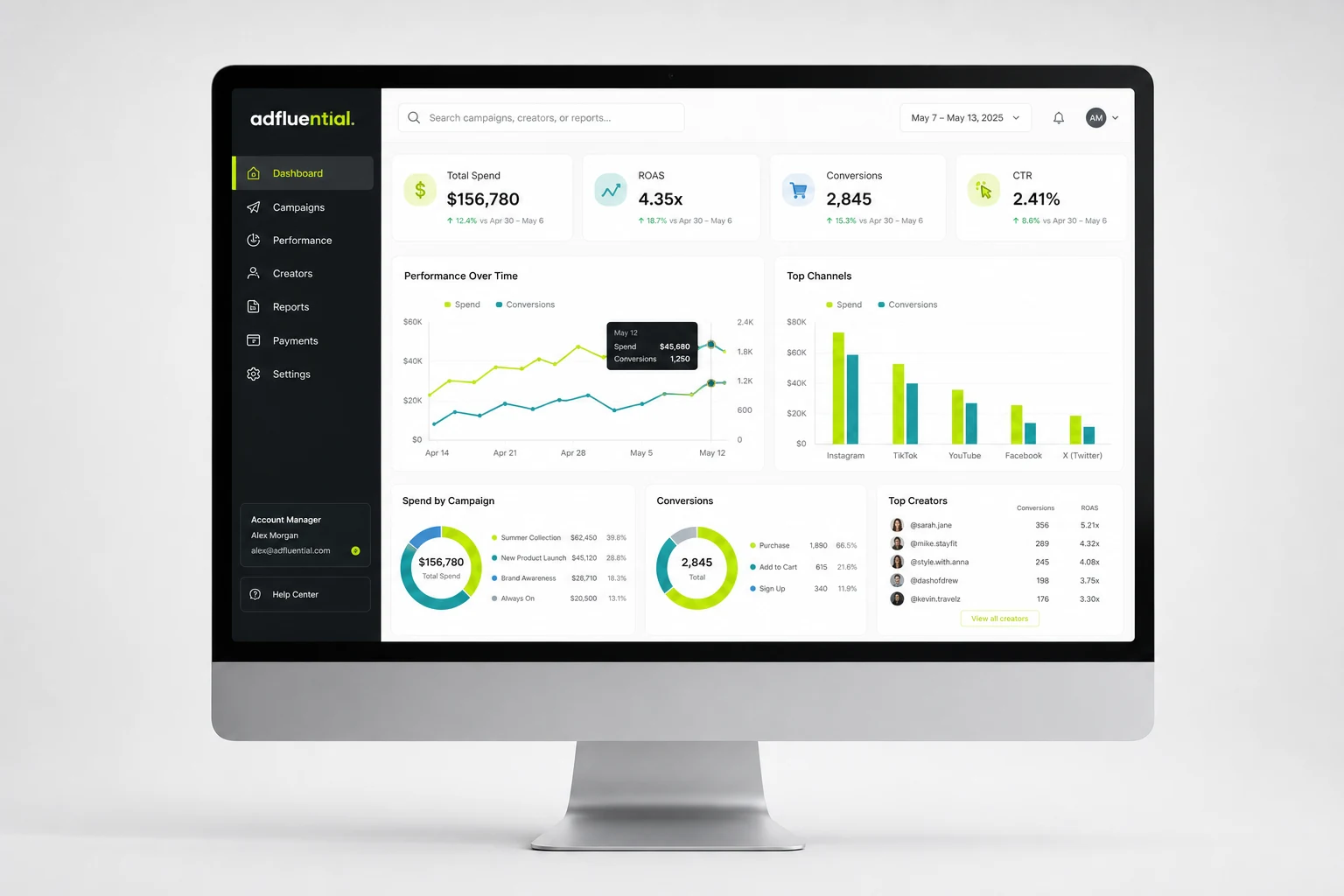
Our campaigns generate the enquiry, apply the agreed checks and route matching leads to one buyer without holding them for a later batch. The sales team receives the original answers and campaign context.
The Buyer Portal gives buyers visibility of delivery and a route for returning contact, appointment and sale outcomes. That helps both teams see whether performance changes with source, product, response or qualification.

Common questions
Speed-to-lead FAQs
What is speed to lead?
Speed to lead is the elapsed time between a customer making an enquiry and the sales team making its first relevant attempt to respond.
What is real-time lead delivery?
Real-time delivery means the provider sends a matching lead to the buyer as the enquiry is processed rather than holding it for a later batch.
Does an automated confirmation count as a sales response?
A confirmation can reassure the customer and explain what happens next, but we measure it separately from a relevant human sales attempt or meaningful contact.
How should speed to lead be measured?
Record enquiry time, buyer receipt, first attempt and first meaningful contact. Review response bands and separate working-hours from out-of-hours enquiries.
How can a business improve lead response time?
Agree clear ownership, match volume to staffed capacity, make new enquiries visible immediately, provide the original context and plan what happens outside normal hours.