

The short version
Buy the opportunity your sales team is ready to handle
Before you buy leads, decide which products and locations you want, how many enquiries the team can contact properly, and whether you need direct leads or qualified appointments.
Then agree the commercials, exclusivity, questions and delivery. Start with a controlled cohort and measure contact, appointment, quote and sale outcomes before increasing volume.
Prepare a one-page buying brief
Give suppliers enough detail to quote the same requirement
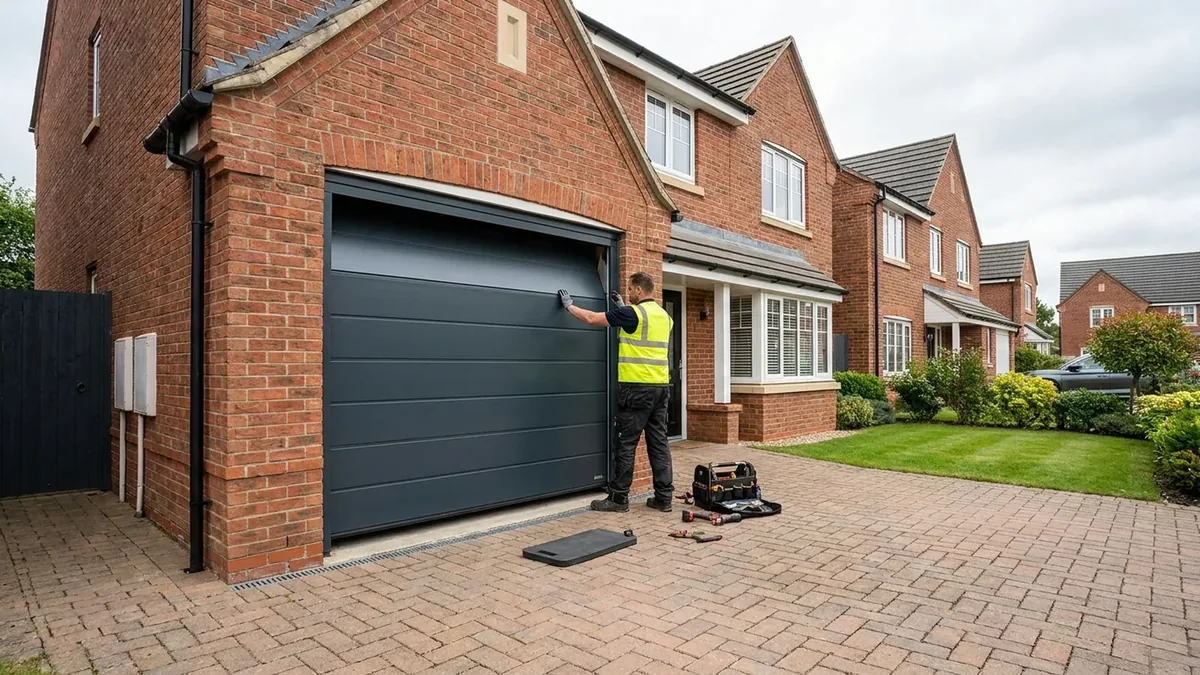
“We need more home-improvement leads” leaves too many decisions to the supplier. Send a brief that distinguishes the work you want from work you cannot serve. Our garage-door campaigns, for example, can cover installation, replacement, repair and automation, but those services are not interchangeable for every buyer.
Use the example below as a starting structure, not as a prescribed Adfluential campaign. Replace the illustrative requirements with your actual coverage, capacity and service.
| Brief item | Example of a specific answer |
|---|---|
| Work wanted | Domestic replacement doors, including powered replacements; exclude repair-only requests |
| Coverage | Attach the postcode list that surveyors actually cover, with any branch exclusions |
| Customer information | Requested service, postcode, project timing and checked contact details; technical measurements collected at survey |
| Sales capacity | A named person owns new enquiries during stated hours; agree daily caps before supply |
| Commercials | Request exclusive CPL pricing, additional fees, payment terms and a total test-spend limit |
| Success measure | Cost per attended survey and completed installation, with cancellations recorded separately |
| Review | Check handling in the first week; assess sales at a review age based on the actual installation cycle |
Ask each provider to mark requirements as supported, unsupported or needing discussion. A smaller postcode list or a different qualification step may change price and volume. Confirm the revised brief rather than comparing two prices for different products.
If you have no historical conversion rate, say so. Use an affordable test-spend limit rather than building a large order around an assumed close rate. If you do have history, share the outcome definitions as well as percentages: a booked survey and an attended survey are not the same result.
02 · Know what is being sold
A list, a current enquiry and an appointment are different products
The phrase “buy leads” can describe very different purchases. A contact list contains people selected from existing data. A current enquiry comes from someone who has recently responded to a campaign. An appointment has moved further through contact and qualification.
At Adfluential, we generate current consumer enquiries through brands and campaigns we own and manage. We agree the product, location and qualification criteria with the buyer, then deliver matching leads exclusively and in real time. We can also add managed contact and appointment support where that is the better fit.
| What you buy | What you receive | Your team handles | Commercial comparison |
|---|---|---|---|
| Contact data or list | Existing records selected by agreed attributes | Establishing current interest and full sales process | Cost per usable contact and opportunity |
| Current lead | A recent product enquiry and its original answers | Contact, qualification, appointment and sale | CPL, cost per contact and cost per sale |
| Qualified appointment | A contacted prospect with an agreed booking | Attendance, assessment, quote and sale | Cost per valid or attended appointment |
| Acquisition arrangement | A shared commercial outcome for a suitable partnership | Sales completion and accurate outcome reporting | Cost or revenue share per completed sale |
03 · Understand the campaign
Look at how the enquiry is generated
We would ask which channel and consumer journey produced the lead, what the person requested, and which information will reach the sales team. A product-specific journey usually gives a buyer more useful context than a broad form that covers several unrelated services.
Provider control matters because campaigns need to change. When a buyer tells us that one product, postcode, advert or answer is performing differently, we can adjust targeting, creative, pages, questions and filters at source.
Ask whether the provider can do the same and how frequently performance is reviewed.

04 · Determine commercials
Agree the model before the first lead arrives
For CPL, confirm the cost per accepted lead, whether supply is exclusive, the products and locations covered, any volume schedule and how the provider handles enquiries outside the agreed criteria.
For appointments, agree what qualification and confirmation is included and how cancelled or unsuitable bookings are treated. For an acquisition model, agree which completed outcome triggers payment and what sales information must be returned.
We recommend modelling each option against your own contact, appointment and sale rates. The best model is the one that matches the work your team can perform and the risk each side can measure.
05 · Exclusive or shared
Find out whether another buyer receives the same enquiry
Exclusive supply means the provider sends a matching lead to one buyer. Shared supply means several businesses may receive it. The consumer can independently contact other companies in either case; the distinction is whether the lead provider creates additional competition.
We supply matching leads exclusively. When comparing offers, we recommend asking this question before comparing CPL, because a shared lead and an exclusive lead create different contact experiences and sales workloads.
Exclusive lead
- One matching buyer receives the provider’s lead
- Cleaner first-contact context
- Higher generation cost carried by one buyer
- Measure contact, appointment and sale outcomes
Shared lead
- Several buyers may receive the same enquiry
- Lower headline unit price may be possible
- Faster competition for the first conversation
- Compare downstream cost rather than CPL alone
06 · First cohort
Start with a test your team can work consistently
Set two review points. First check that the campaign is operating as agreed: correct services and locations, prompt delivery, a sales owner and no unnoticed queue of unattempted leads. Do not wait for completed sales to correct an obvious matching or handling problem.
Then review commercial performance once leads have had a realistic chance to convert. Keep the test funded and capped to that decision, rather than automatically increasing volume after a few promising calls. With 50 leads, one extra completed sale changes the reported sale rate by two percentage points. That illustrates why a small test can verify setup without establishing a reliable long-term conversion rate.
Agree in advance whether the next decision is to continue at the same volume, change one requirement, expand or stop. If results are inconclusive, say so. Extending a test should be a budget decision, not a claim that more spend must eventually work. Our cohort review guide explains how to compare leads at equivalent ages.
- AgreeProduct, area, commercial model and volume.
- PrepareSales ownership and response capacity.
- ReceiveLeads with their original campaign context.
- RecordContact, appointments, quotes and sales.
- ReviewEconomics before increasing supply.
07 · Commercial review
Assess a mature cohort from lead to sale
A bought lead is useful only if it contributes to a viable sales process. We recommend reviewing the same cohort through each stage rather than mixing recent lead volume with older sales results.

Follow the whole outcome
Our window case study does not stop at lead volume
The published campaign connects 10,000 leads per month to 1,222 appointments, 349 sales, £2.375m in revenue and an 8.3x return on spend. That is the level of downstream visibility we want buyers to work towards.
Buying through Adfluential
Tell us what your sales operation needs
We work across specialist UK, US and Ireland consumer sectors. Buyers tell us what they sell, where they operate, which questions matter and how much volume they can manage. We then confirm whether direct leads, managed appointments or a suitable acquisition partnership is available.
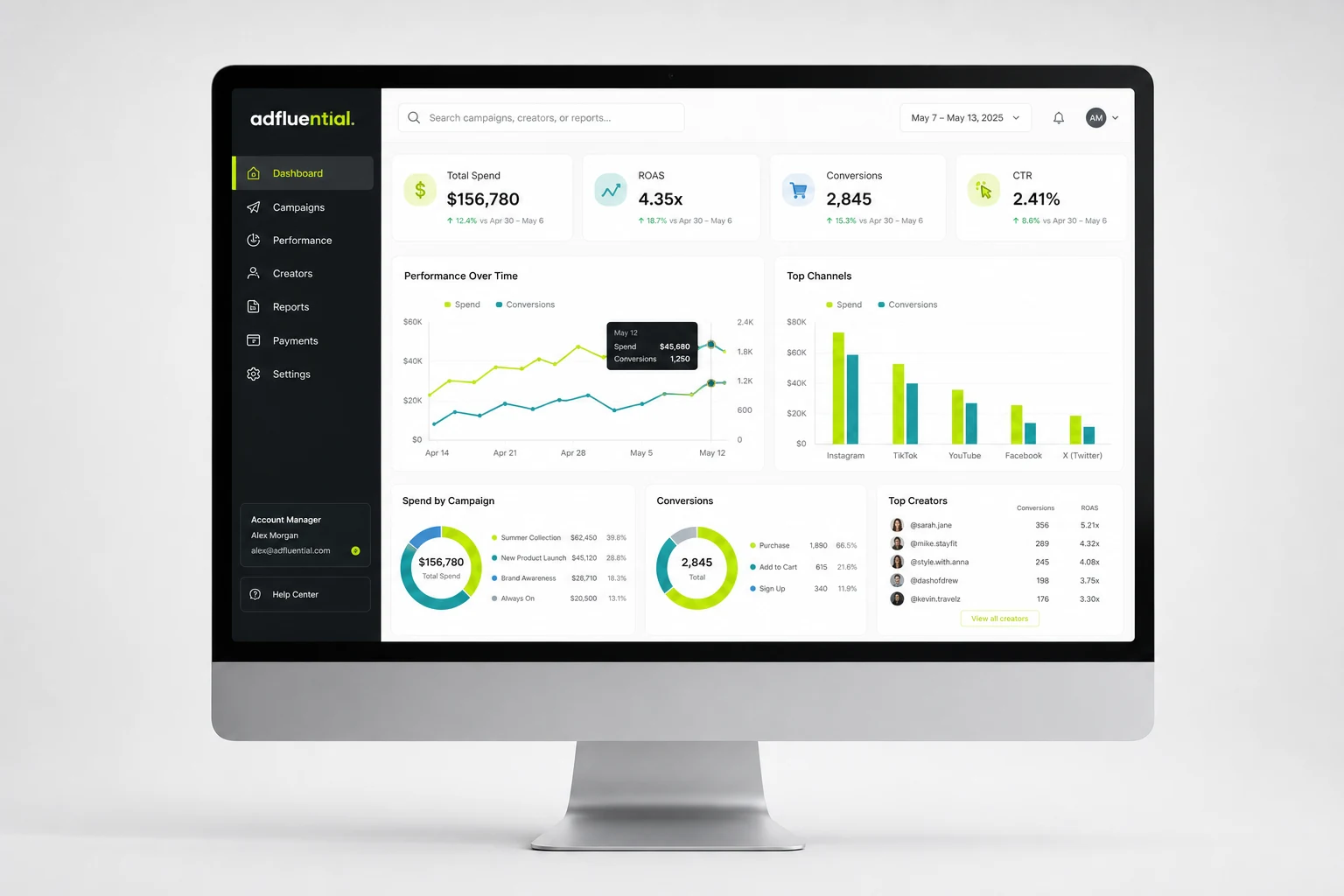
Our Buyer Portal gives teams visibility of delivered leads and a way to return sales outcomes. We use that feedback to improve the campaigns we own and manage.
Common questions
Buying leads FAQs
Where can I buy leads in the UK?
Businesses can buy leads from first-party lead generators, marketplaces, data suppliers and appointment providers. We recommend choosing the model that matches the stage your sales team is equipped to handle.
What should I check before buying leads?
Confirm the product, territory, volume, commercial model, exclusivity, qualification, delivery and outcomes you will measure. Make sure the sales team has capacity before supply starts.
Should I buy exclusive or shared leads?
Exclusive leads are supplied to one matching buyer by the provider. Shared leads cost less but may create competition between several sales teams. Compare cost per appointment and sale, not CPL alone.
How many leads should I buy first?
Start with enough leads to review a meaningful cohort, but no more than the sales team can contact consistently. The right number depends on product, territory, response capacity and sales-cycle length.
How do I know whether bought leads are working?
Track accepted leads, contact, appointments, quotes, completed sales, revenue and margin. Review a mature cohort against the agreed commercial model before increasing volume.